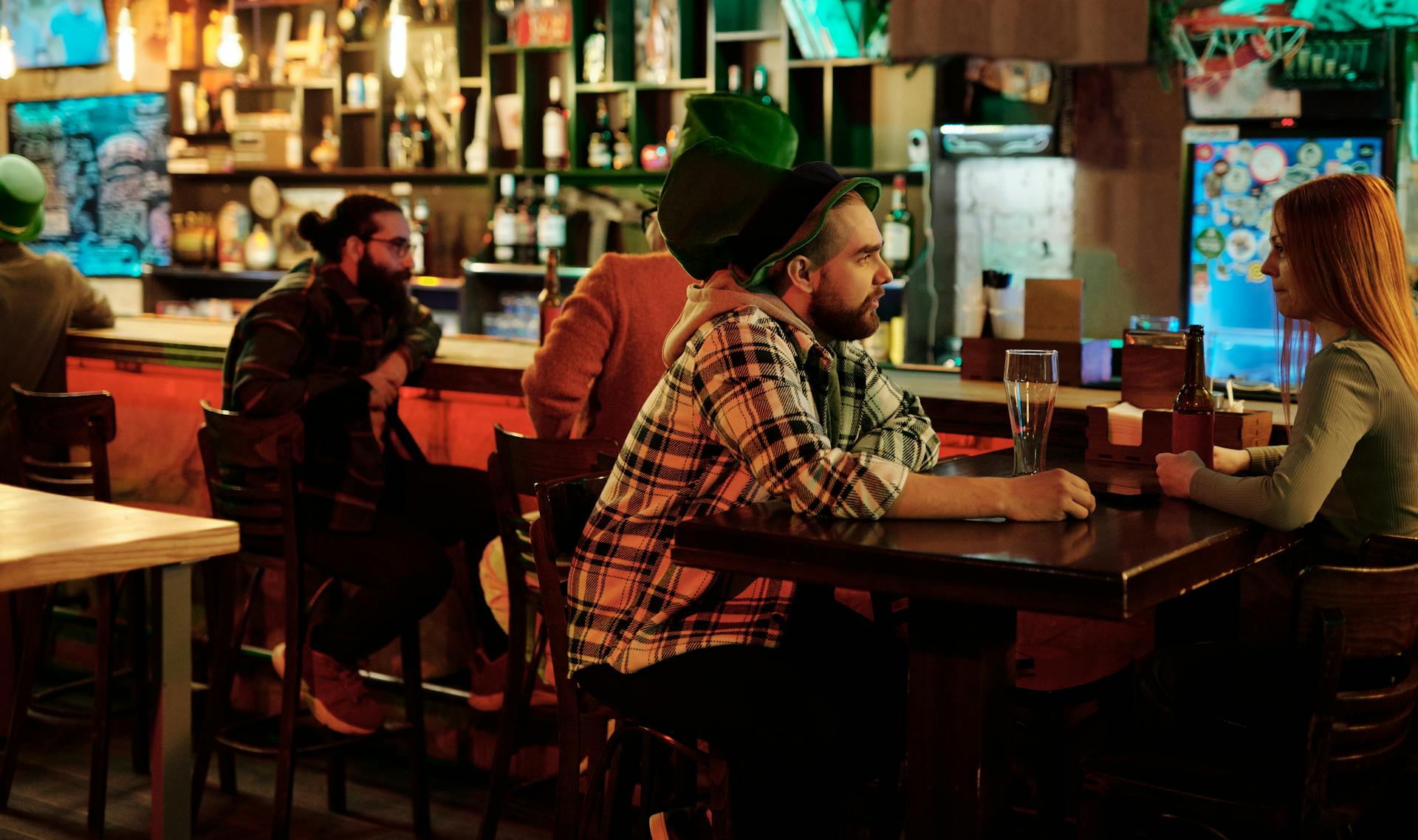
Having a website for your bar is no longer optional: it’s the place where customers check hours, view the menu, and decide whether to visit.
This guide explains what sections a bar’s website needs, how to build one without knowing how to code, what mistakes to avoid, and how to choose the right web hosting to ensure it’s always available.
Why Your Bar Needs Its Own Website
When someone wants to go out for a drink or is looking for a place to meet up with friends, the first thing they do is search on Google. If your bar doesn’t appear with clear, up-to-date information, that potential customer is likely to choose another place that does have an online presence.
Social media helps, but it’s not enough. Instagram and Facebook rely on algorithms that decide how many people see your content. Your own website, on the other hand, is a digital asset that you control completely: you can publish the menu, hours, location, a reservation form, and any relevant information without relying on third parties.
Additionally, a website with its own domain (for example, barelnomada.com) conveys more credibility and professionalism than a social media profile. Customers notice this, and it directly influences their decision to visit or not.
What sections should a bar’s website have
A website for a bar doesn’t need to be extensive, but it must have the right information in the right place. These are the essential sections:
Home Page
The homepage should convey in just a few seconds what kind of bar it is, what its atmosphere is like, and why it’s worth visiting. A phrase that summarizes the concept, a high-quality photo of the space or the drinks, and a call-to-action button (reserve a table, view the menu, see how to get there) are enough to capture attention.
Menu
This is the section users visit most often before deciding to go. It can be presented as a page with images and prices, or as a downloadable PDF. The important thing is that it’s up to date. An outdated menu breeds mistrust and, in some cases, conflicts at the venue.
Hours and Location
It seems obvious, but many bars don’t have this information visible or accessible. The hours should be on the homepage or easily accessible from it. The location, ideally, should include an embedded Google Maps map and the exact address written out in text (so Google can index it correctly).
Reservations
If the bar accepts reservations, including a form or a button that links to a reservation system is essential. There are specific plugins for this in WordPress can help you choose the most suitable option based on booking volume and the type of bar.
Photo Gallery
Images of the atmosphere, drinks, and events are the visual factor that most influences the decision to visit a bar. You don’t need studio photos: good photos taken with a phone in good lighting already make a big difference.
Events and Promotions
If the bar hosts theme nights, concerts, happy hours, or any special events, posting them on the website helps both SEO and customer acquisition. This section can function as a small blog or as a list of upcoming events.
Contact and Social Media
A basic contact form, the WhatsApp or phone number, and links to the venue’s social media accounts. Simple and functional.
How to create a website for your bar step by step
You don’t need to know how to code to have a professional website. The process can be broken down into four stages:
Step 1: Choose a domain
The domain is the bar’s web address (for example, barelnomada.com). It should be:To check availability and register the domain, you can do so directly through a hosting provider that also manages domains. This simplifies administration.
- Short and easy to remember
- The same as or similar to the bar’s name
- With the
.comextension if available, or the country’s local extension (.mx,.es,.ar,.co, etc.)
Step 2: Sign up for a hosting plan
Hosting is the service that keeps the website active on the internet. For a bar, a shared web hosting plan is more than sufficient in most cases: it doesn’t require significant technical resources and allows you to install WordPress with just a couple of clicks.
The key criteria when choosing hosting for this type of project are: loading speed, high uptime (ensuring the site is always available), and accessible technical support in case any issues arise.
Step 3: Install WordPress and choose a template
WordPress is the most widely used content management system in the world and is the most recommended option for creating a bar’s website without needing technical knowledge. Most hosting plans include one-click automatic installation.
Once installed, choose a template (theme) designed for restaurants or bars. There are hundreds available, many of them free. Some popular options are Astra, OceanWP, or Hello (for use with Elementor). If you have no experience designing websites, themes with preloaded demos allow you to have a presentable site up and running in just a few hours.
Step 4: Fill in the content and publish
With the template active, fill in the sections described above: home, menu, hours, gallery, events, contact. Before publishing, make sure the site looks good on mobile devices (most local searches are done from a phone), that the SSL certificate is active (the green padlock in the browser bar), and that loading times are reasonable.
How to rank your bar’s website on Google
Creating the website is half the battle. The other half is getting it to appear when someone searches for “bar in [your city]” or “bar with live music in [neighborhood].”
Basic optimization for local searches
- Google Business Profile: Register your bar on Google Maps with its name, address, hours, phone number, and photos. It’s free and appears in the top results when someone searches for a nearby bar.
- Local keywords: The page title, body text, and headings should include references to the city or neighborhood. For example, “cocktail bar in downtown Bogotá” is more effective than simply “cocktail bar.”
- Page load speed: Google penalizes slow sites. Optimizing images before uploading them and using a good hosting provider already solves a large part of the problem.
- Structured data: adding the business type to the site’s code (
LocalBusinessorBarOrPubin Schema.org format) helps Google better understand what the site is about.
Content that attracts visitors
Publishing short articles about events, new additions to the menu, or fun facts about cocktails generates additional traffic and reinforces the site’s relevance. You don’t need to post every day: one post every two weeks is enough to keep the site active in Google’s eyes.
For similar projects in the food and beverage industry, the guide on creating a website for a coffee shop offers additional tips on content and SEO that can easily be adapted to a bar’s context.
Which hosting to choose for your bar’s website
For most bars, a shared hosting plan or basic web hosting is sufficient. However, there are some factors that make a difference in practice: Neolo is a solid option for this type of project. It’s a company with over 20 years of experience, founded in 2002, serving more than 10,000 customers and operating 100% bootstrapped—without investors, which means its decisions are customer-focused, not driven by artificial growth metrics. Technical support is handled by real people, with fast response times, and they offer a 30-day money-back guarantee if the service doesn’t meet expectations.
- Uptime: if the site is down when someone wants to check the schedule or make a reservation, that visit is lost. A provider with consistently high uptime is essential.
- Speed: fast loading times affect both the user experience and Google rankings.
- Real technical support: when something goes wrong (and eventually something will), it matters a lot to be able to speak with a person who understands the problem and resolves it quickly.
- SSL certificate included: this is necessary for the site to appear as secure in browsers.
You can review the available plans at Neolo Web Hosting and choose the one that best suits the size and needs of your bar.
Common mistakes when creating a bar’s website
1. Not keeping the hours updated
This is the most common mistake and the one that frustrates customers the most. Outdated hours lead to wasted trips to the venue and negative reviews. Updating the hours on the website and in Google Business Profile every time they change is a small task with a big impact.
2. Using only stock photos
Generic photos of glasses and bottles don’t convey the bar’s personality. Customers want to see the actual space, the atmosphere, the bar, and the terrace if there is one. Authentic photos convert better than stock images.
3. Not optimizing for mobile
Over 70% of searches for entertainment venues are done on a phone. If the site doesn’t look good on mobile or takes too long to load, the user will leave within seconds.
4. Posting the menu only as an image
Menu images cannot be indexed by Google. Listing dishes and drinks in text (even in plain text) helps with search rankings and allows customers to find the bar when searching for specific terms like “craft gin and tonic” or “tapas in [city].”
5. Not having SSL enabled
A site without an SSL certificate displays a “not secure” warning in the browser. This immediately breeds mistrust and reduces conversions. Most hosting providers include free SSL: you just need to enable it.
6. Ignoring Google Business Profile
Many bar owners create a website but don’t link it to or update their profile on Google Maps. These two channels complement each other: the Google profile captures local searches, and the website provides comprehensive information for those who want to learn more.
How to Create a Website for Your Coffee Shop or Bar
If you prefer a visual guide, this video shows you step-by-step how to build a website for this type of business using accessible tools and without any technical knowledge:
Frequently Asked Questions
Do I need to know how to code to create a website for my bar?
No. With WordPress and a template designed for restaurants or bars, you can build a complete site without writing a single line of code. Drag-and-drop tools (like Elementor or the WordPress block editor) let you design pages visually and intuitively.
How much does it cost to create a website for a bar?
The basic cost includes the domain (generally between $10 and $20 per year) and hosting (starting at a few dollars per month for shared plans). A functional website using WordPress, a free template, and your own content can be up and running for less than $100 per year. If you hire design or development services, the cost increases depending on the scope of the project.
Is a website better, or is it enough to just have social media?
The two complement each other, but they are not equivalent. Social media is good for daily visibility and interacting with regular customers. Your own website is where official information is centralized, Google rankings are improved, and new customers who are actively searching for a bar in the area are attracted. Relying solely on social media means accepting that your reach is controlled by an external algorithm.
What domain extension is best for a bar?
The .comremains the most recognized and versatile option. If the bar operates primarily in a specific country, the local extension (.mx, .es, .ar, .co, etc.) is also valid and can reinforce local identity. Some food and beverage businesses also use extensions like .baror .restaurant, though they are less widely recognized by the general public.
How often should I update my bar’s website?
At a minimum, whenever you change the hours, menu, or prices. Posting updates about events or promotions on a regular basis (even if just once a month) helps with search engine rankings and keeps the site active. Sites without updates gradually lose relevance on Google.
Do I need an online reservation system?
It depends on the type of bar. If the venue has limited capacity or frequently hosts large groups, a reservation system reduces issues and improves the customer experience. For walk-in bars or those with ample capacity, it may not be necessary. If you decide to implement one, there are specific WordPress plugins for this that integrate seamlessly.
Does hosting affect my bar’s SEO ranking?
Yes, directly. Load speed and uptime are factors that Google takes into account. Slow hosting or frequent downtime negatively impacts your ranking. That’s why it’s important to choose a provider with reliable infrastructure and good server response times.
Conclusion
Creating a website for your bar is an investment that pays off quickly: greater visibility on Google, better-informed customers, and a more professional business image. The process doesn’t require advanced technical knowledge, and with WordPress and the right tools, you can have a functional site up and running in just a few days.
What does matter is choosing the right hosting, because that determines whether the site is always available when a potential customer searches for it. For this type of project, Neolo web hosting offers stable plans, technical support provided by real people, and over two decades of industry experience, making it a reliable option for both bars just starting their digital presence and those looking to improve what they already have.