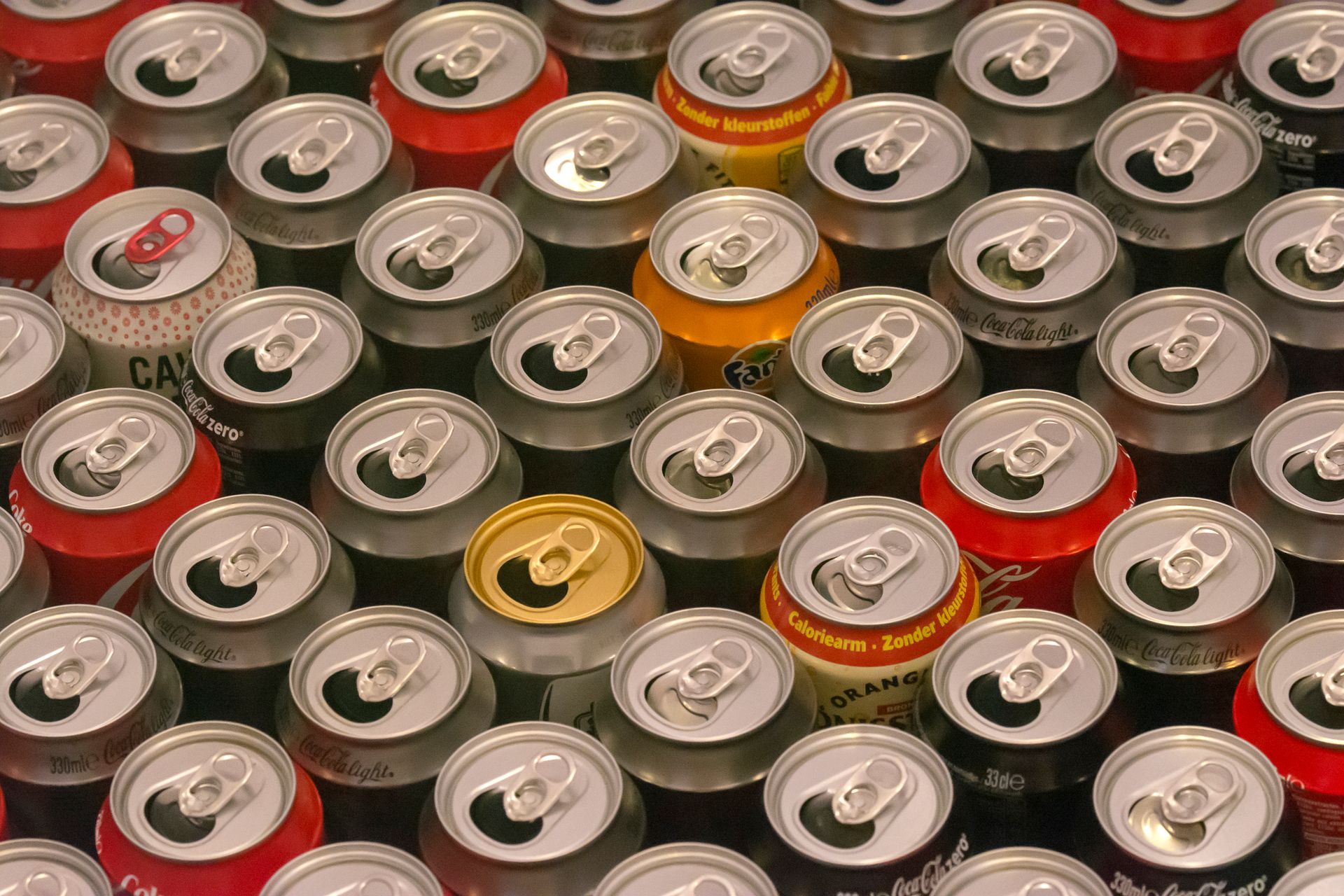
A beverage business can take many forms: a natural juice brand, a mineral water distributor, a craft brewery, a cocktail bar, an online wine store, or an energy drink company. In all these cases, your digital presence matters.
Social media helps, but it’s not enough. An Instagram profile can disappear, change its rules, or simply stop showing your content to your followers. A website of your own, on the other hand, is a digital asset that remains under your control.
Plus, consumers look for information before buying: ingredients, prices, where to get the product, whether there’s home delivery, and what other buyers are saying. If they don’t find that information on your site, they’ll look for it on your competitors’ sites.
The beverage industry also lends itself well to content: recipes, pairings, brand history, production processes. All that material builds trust and improves search engine rankings.
What type of website suits your business model
Not all beverage businesses need the same type of site. Choosing wisely from the start saves time and money.
Informational or brand website
This is the simplest option. It introduces the company, the products, the story behind the brand, and contact channels. It’s ideal if you sell through distributors, physical stores, or marketplaces, and you just need customers to find reliable information about you.
It works well for:
– Artisanal beverage brands that sell at fairs or local venues
– Wine, beer, or spirits producers who distribute to wholesalers
– Businesses that don’t yet have their own shipping logistics
Website with an online store
If your business sells directly to the end consumer, you need a store. This involves a product catalog, shopping cart, payment gateway, and order management.
Works well for:
– Distributors who want to reach consumers directly
– Healthy beverage brands with monthly subscriptions
– Importers of specialty beverages without a physical location
Website with menu and reservations
If you have a bar, beverage restaurant, or tasting room, the site serves a different purpose: to display the menu, allow reservations, and drive in-person visits.
What sections should a beverage website have
The site’s structure depends on the type of business, but there are sections that virtually all beverage businesses should include.
Homepage
This is the first impression. It must communicate in just a few seconds what the business offers and why it’s worth sticking around. A well-curated product image, a clear headline, and a visible call-to-action button are enough to get started.
Avoid long texts in this section. Visitors don’t read the first screen—they scan it.
Product catalog or menu
Each product deserves its own page with:
– A high-quality photo (you don’t need a professional photographer, but good lighting is essential)
– An honest description: flavor, origin, ingredients, format
– Price if sold directly
– Available options (sizes, packs, flavors)
About the Brand
Consumers of artisanal, organic, or specialty beverages often highly value the story behind the product. Who makes it, where, with what materials, and how the idea came about.
This section doesn’t have to be long. Three honest paragraphs build more trust than a company history written in corporate jargon.
Where to buy or find us
If the business sells in physical stores, on marketplaces, or has its own location, state this clearly. An embedded map, a list of retailers, or a contact form are all valid options.
Blog or content (optional but recommended)
The beverage industry has plenty of material to share: cocktail recipes, the benefits of certain ingredients, how to pair wine, differences between types of beer. This content attracts visitors from search engines and positions the brand as an authority.
A well-written blog post can drive traffic for years at no additional cost.
Contact
Simple but essential. A form, an email address, or a link to WhatsApp. If you have active social media accounts, link them here as well.
How to create a website step by step
1. Define the site’s objective
Before choosing tools, it’s important to know what the site should do. Inform? Sell? Generate reservations? That answer determines everything else.
2. Choose a domain name
The domain is the business’s web address. Ideally, it should match the brand name or clearly reflect it. If the name is taken, you can use a variant with the country code (.ar, .mx, .co) or the industry extension (.store, .shop, .bar).
You can register the domain directly before building the site, to secure it.
3. Sign up for web hosting
Hosting is the service that keeps the site active on the internet. For a startup beverage business, a web hosting plan is sufficient. If the website includes an online store with a large catalog or high traffic, you should consider a more robust plan.
4. Choose how to build the site
There are several options:
- WordPress with a visual builder (Elementor, Divi): flexible, with thousands of templates; it requires a bit of a learning curve but offers a lot of control.
- AI-powered site builder: the fastest option. Tools like Neolo Express allow you to generate a complete site from a description, without touching any code.
- WooCommerce: if you need an online store, this is the most widely used WordPress extension in the world.
For those who don’t want to spend time learning platforms, the option to create websites in minutes with AI is especially practical.
5. Design and upload the content
With the platform set up, the task is to fill in the sections: text, product photos, logo, contact information. It’s better to start with fewer well-crafted pages than with many half-finished ones.
6. Connect an SSL certificate
An SSL certificate ensures that the connection between the visitor and the site is encrypted. Additionally, Google views it as a sign of trust. Most hosting providers include it at no extra cost.
7. Test before publishing
Check that the site works well on mobile (most traffic comes from phones), that forms submit messages correctly, and that pages load quickly. Tools like Google’s PageSpeed Insights let you run these checks in minutes.
8. Publish and start promoting
Once published, share it on social media, add it to your Google Business profile (especially if you have a physical location), and start building content gradually.
Common mistakes when creating a beverage website
Using only generic stock photos. In the beverage industry, the product image is part of the selling point. A real photo, even if it’s not perfect, conveys more authenticity than a generic image downloaded from the internet.
Failing to indicate where the product can be purchased. Many beverage brand websites display products but don’t explain how to buy them. If there’s a store, link to it. If sold in retail locations, list them.
Ignoring mobile. The design must look and function well on small screens. If the navigation menu is hard to tap or the photos are cropped, the visitor will close the site.
Failing to update the site after launch. A site with outdated information, prices that no longer apply, or past events breeds mistrust. Content requires maintenance.
Confusing free hosting with affordable hosting. Free services usually have significant limitations: forced advertising, limited space, no custom domain, and no support. For a real business, it’s best to sign up for hosting from the start. And if the business grows, it’s helpful to know how to scale up without complications.
Little-known tips to stand out in the industry
Include seasonal content. A beverage business can publish content tied to times of the year: summer cocktails, hot drinks for winter, party pairings. That type of content has predictable search spikes and drives organic traffic.
Show the production process. If the product is artisanal, showing how it’s made generates curiosity and trust. A short video or a series of photos of the process can be more powerful than any marketing copy.
Add a recipes section. Searches for drink recipes are very common. A blog with recipes for cocktails, smoothies, or combinations that use your product brings qualified traffic from people already interested in that type of product.
Collect and display real reviews. A section with customer reviews or screenshots of positive comments on social media serves as social proof. In the food and beverage industry, the opinions of other consumers carry a lot of weight.
Optimize the site for local searches. If the business has a specific geographic coverage area, including the name of the city or region in the text and page titles helps it appear in searches like “artisanal beverages in [city].”
For beverage businesses that want to start selling online without spending weeks setting up a platform, Neolo offers web hosting plans with real support, high server availability, and a 30-day money-back guarantee. With over 20 years in the market and more than 10,000 customers, it’s a proven choice for those who need their site to be up and running from day one.
What Neolo customers say
★★★★★ Fernand
“I’ve had web hosting with Neolo for many years, and honestly, I’ve never had any service interruptions. Our websites are always up and running, and on the rare occasion when an issue arises from an external source beyond their control, the Neolo team jumps in to fix it. Excellent service, both technically and personally.”
★★★★★ William Portero
“Excellent company in terms of products, prices, and customer service. I signed up for hosting services and also for online store setup, and everything turned out perfectly.”
★★★★★ Martin Aberastegue
“Neolo is the best web hosting company I’ve ever worked with. I’ve been relying on their services for over 7 years, both for my own projects and those of my clients.”
Frequently Asked Questions
How much does it cost to create a website for a beverage business?
The cost depends on the complexity. A basic informational site can be created for the price of an annual hosting plan plus the domain, especially if you use a website builder with templates. An online store with order management requires a slightly higher investment, though it remains affordable.
Do I need to know how to code to create a website?
No. Today, there are visual tools and AI-powered website builders that let you build a professional site without touching any code. What you do need is time to organize your content: text, photos, and site structure.
Is it enough to have social media and not have your own website?
Social media is useful but doesn’t replace having your own site. It doesn’t allow for the same level of customization, isn’t under your control, and depends on algorithms that can limit your reach. Your own website is the only digital channel that belongs entirely to you.
What kind of hosting does an online beverage store need?
To start with, a good-quality shared hosting plan is sufficient. If the store grows in terms of products and traffic, it’s advisable to migrate to a premium plan or a VPS. The key is to choose a provider that offers real technical support and strong uptime metrics, so the store is always up and running when customers want to shop.
How can my website appear on Google?
To appear in search engines, you need to: have your site indexed (with no blocks in robots.txt), use relevant keywords in your content, have an active SSL certificate, and regularly publish useful content. If your business has a local presence, creating a Google Business profile is equally important.
Can I sell beverages directly from the site?
Yes. With an integrated online store, you can manage your product catalog, orders, and payments. The most common option is WordPress with WooCommerce, though there are also simpler solutions for small businesses just starting out.
How long does it take to get the site ready?
With today’s tools, a basic site can be online in a day. A store with a full catalog, payment integration, and well-designed product pages can take between one week and one month, depending on the volume of products and the availability to produce the content.
Conclusion
Creating a website for a beverage business doesn’t require extensive technical knowledge or a large budget. What it does require is clarity about the site’s purpose, attention to visual content, and choosing a hosting provider that ensures the site is available when customers need it.
If you’re looking for a solution that combines ease of use with reliable infrastructure, Neolo’s web hosting plans are a solid option. The team responds to 80% of inquiries in less than an hour, uses a hybrid support model combining real people and AI, and offers a 30-day money-back guarantee if the service doesn’t meet expectations. In short, it provides the technical foundation a beverage business needs to build a stable digital presence.